Winter Landscaping Prep Tips to Protect Your Outdoor Space

The first hard freeze has a way of exposing every outdoor task that got pushed aside in fall. A clogged gutter overflows onto a walkway. A forgotten hose splits. Tender shrubs sag under wet snow. Patio furniture that looked fine in October suddenly looks weather-beaten by January.
The good news is that winter damage is often preventable. A weekend or two of smart outdoor prep can protect plants, hardscaping, tools, and gathering spaces through cold weather, ice, snow, and heavy rain.
Use this guide as a practical checklist for getting your yard ready before winter settles in.
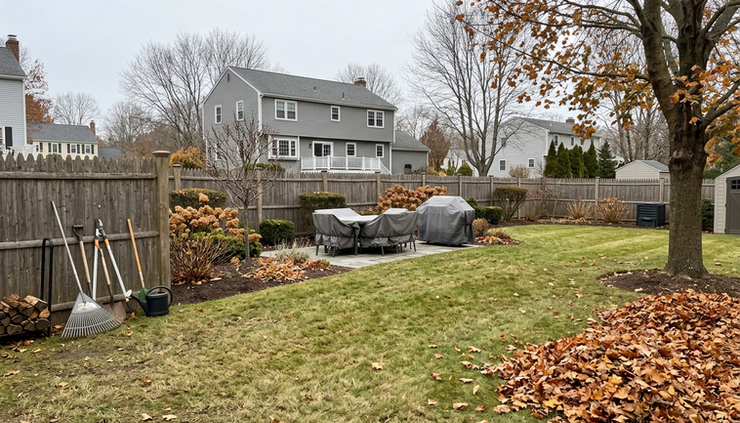
Start with a full outdoor walk-through
Before grabbing tools, walk the property slowly and look at it the way winter weather will. Water, wind, ice, and falling branches cause most seasonal damage, so focus on weak spots.
Look for:
Low areas where water collects
Loose pavers, stones, steps, or edging
Dead branches hanging over roofs, fences, driveways, or walkways
Containers, hoses, tools, and decor that need to come inside
Plants that look stressed, shallow-rooted, or exposed
Drainage paths blocked by leaves or soil
This quick inspection helps you sort tasks by urgency. A cracked planter can wait. A heavy branch over a parked car should not.
Pay close attention to places where different materials meet, such as lawn and patio edges, siding and soil, or driveway and planting beds. These edges often trap water, leaves, and ice. Cleaning them now helps prevent slick surfaces and freeze-thaw damage later.
Clean up leaves without stripping the yard bare
Fallen leaves can be helpful or harmful depending on where they land. A thin layer in garden beds can insulate soil and feed it as leaves break down. A thick, wet mat on grass can block sunlight, hold moisture, and invite mold.
For lawns, remove heavy leaf cover before it packs down. You do not need a perfectly spotless lawn, but grass should be able to breathe.
Good options include:
Mulching dry leaves with a mower so they break into small pieces
Raking thick piles away from turf
Moving shredded leaves into planting beds
Adding leaves to a compost pile
Bagging diseased leaves instead of composting them
If leaves collect against fences, walls, basement windows, or wooden structures, clear them out. Wet leaves hold moisture, and that can increase the chance of rot, staining, and pest shelter.
Garden beds are different. Around perennials, shrubs, and trees, shredded leaves can act like a natural blanket. Keep the layer loose and avoid piling leaves directly against stems or trunks.
Give the lawn one last round of care
A healthy lawn goes into winter stronger and wakes up better in spring. Late fall lawn care is less about looks and more about root health.
Keep mowing until grass stops growing. For the final cut, avoid scalping the lawn. Grass that is too short has less protection from cold, while grass left too long can mat under snow.
If your region gets cool fall weather, this is also a good time to:
Reseed thin patches
Aerate compacted soil
Apply a fall lawn fertilizer if appropriate for your grass type
Remove leaves from high-traffic areas
Keep foot traffic off soggy turf
Water newly seeded areas as needed until freezing weather arrives. Once the ground freezes, irrigation is no longer useful and can create ice problems.
For warm-season lawns in milder climates, winter prep may look different. The goal is still the same, which is to reduce stress before growth slows. Keep the lawn clean, avoid overwatering, and skip aggressive work once the grass is dormant.
Prune carefully and leave some plants alone
Pruning is one of the most misunderstood winter prep tasks. Some cutting helps plants weather storms. Too much cutting can stimulate new growth or remove buds that would have bloomed next spring.
Start with the obvious work. Remove dead, broken, diseased, or unsafe branches. This is especially important for branches near roofs, sheds, power lines, sidewalks, and driveways.
For most shrubs and trees, avoid heavy reshaping right before deep cold. Fresh cuts can be vulnerable in harsh weather, and late pruning can remove flower buds on spring-blooming shrubs.
A simple rule helps:
Prune for safety and plant health now. Save major shaping for the right season for that plant.
Perennials vary. Some can be cut back after frost. Others offer winter interest, seed for birds, or natural crown protection. Ornamental grasses, coneflowers, sedum, and similar plants often look good through winter and can be cut back in early spring.
Cut back plants that are diseased, mushy, or collapsed. Leave sturdy stems and seed heads if they are healthy and not causing problems.
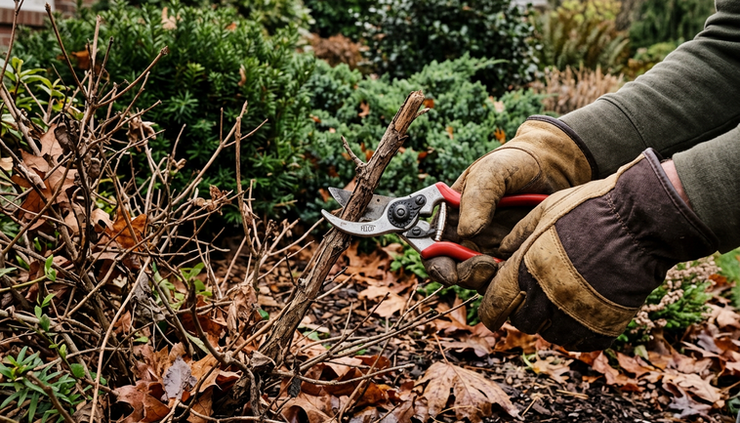
Protect trees and shrubs from cold, wind, and wildlife
Young trees, broadleaf evergreens, and newly planted shrubs often need extra help during winter. Wind, sun, salt spray, ice, and hungry animals can all cause damage.
Start with water. Trees and shrubs should enter winter hydrated, especially evergreens. If fall has been dry, water deeply before the ground freezes. Evergreens lose moisture through their leaves even in winter, so dry roots can lead to brown tips and dieback.
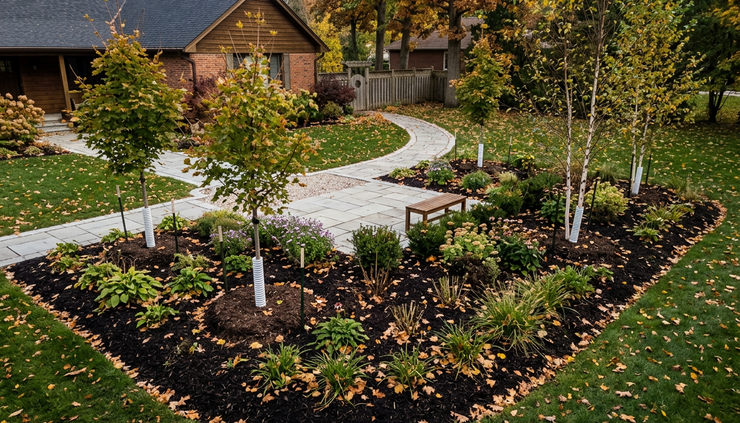
Next, mulch correctly. Add a layer of mulch over the root zone to help regulate soil temperature and hold moisture. Keep mulch away from the trunk or stems. A mulch pile against bark can trap moisture and invite pests.
Use the donut method, not the volcano method. Mulch should spread outward, not climb upward.
Young trees may also benefit from trunk guards. These can help reduce damage from rodents, rabbits, deer rubbing, and sunscald. Remove or adjust guards as the tree grows so they do not restrict the trunk.
For shrubs near roads or driveways, protect them from de-icing salt. Burlap screens can block salt spray and drying winter wind. Wrap supports around the plant, then attach burlap to the supports rather than tying burlap tightly around branches.
If deer are common where you live, add protection before food gets scarce. Fencing, cages, or repellents work best when used early and checked often.
Prepare garden beds for a cleaner spring
Garden bed prep pays off twice. It protects soil through winter and makes spring planting easier.
Start by removing weeds before they go to seed. Cool weather weeds often keep growing later than expected, so do not ignore them. Pull the whole root when possible.
Next, clear out annuals that have finished for the season. Healthy plant material can be composted. Diseased plants should go in the trash or municipal yard waste system, based on local rules.
For vegetable gardens, remove old vines, rotting fruit, stakes, cages, and plant ties. These leftovers can harbor insects and disease. Clean supports before storing them.
Once beds are cleared, protect the soil. Bare soil can compact, erode, and lose nutrients during heavy winter rain or snowmelt. Cover it with one of these:
Shredded leaves
Straw
Compost
A winter cover crop, where suitable
Mulch around permanent plantings
If you add compost in fall, let winter moisture help it settle into the top layer of soil. There is no need to overwork the bed. Heavy digging can disrupt soil structure, especially when soil is wet.
Drain, shut off, and store water systems
Water expands when it freezes, which makes outdoor plumbing one of the highest-risk areas for winter damage. A few simple steps can prevent cracked hoses, broken fittings, and irrigation repairs.
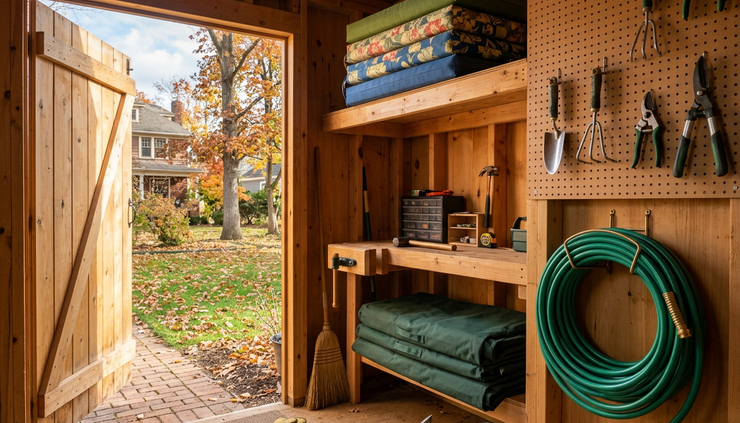
Disconnect hoses from spigots. Drain them fully, coil them loosely, and store them in a garage, shed, or basement. Leaving a hose attached can trap water inside the faucet and increase the chance of freezing.
Shut off outdoor water lines if your home has interior shutoff valves. Open the exterior faucet after shutting off the valve so trapped water can drain.
For irrigation systems, follow the manufacturer’s instructions or hire a professional to winterize the system. Some systems need compressed air blowouts, and doing that incorrectly can damage parts or create safety risks.
Do not forget smaller water features. Empty fountains, birdbaths, rain barrels, and decorative bowls if they are not designed for freezing conditions. Store pumps indoors after cleaning them.
If a rain barrel stays outside, drain it and leave the spigot open. Turn it upside down or cover it so water cannot collect and freeze inside.
Protect patios, walkways, decks, and driveways
Hardscaping takes a beating in winter. Freeze-thaw cycles can widen cracks, lift pavers, and weaken surfaces. The best protection starts with cleaning and drainage.
Sweep patios, steps, and walkways before snow arrives. Leaves and soil can stain surfaces and create slippery spots. Remove weeds from cracks, since roots can widen gaps as they grow.
Check for loose stones, uneven pavers, cracked steps, or wobbly railings. Fix tripping hazards before ice hides them. If repairs have to wait until spring, mark dangerous areas clearly and avoid using them in winter.
For decks, remove furniture, planters, and rugs that trap moisture. Clean debris from between boards. Make sure water can drain freely rather than pooling near posts or against the house.
Be careful with ice melt. Some products can damage concrete, stone, plants, and pet paws. Use only what you need, and choose a product that fits the surface. Sand can add traction without the same chemical impact, though it needs cleanup later.
The best winter hardscape plan is simple: keep surfaces clean, keep water moving, and fix small hazards before freezing weather turns them into bigger ones.
Store outdoor furniture, tools, and decor the right way
Outdoor furniture might be weather-resistant, but winter can still shorten its life. Moisture, freezing temperatures, UV exposure, and wind all wear down finishes and fabrics.
Clean furniture before covering or storing it. Dirt and mildew are harder to remove after months under a cover. Let everything dry fully first.
Store cushions indoors in a dry place. Even weatherproof fabrics can develop mildew if they are stored damp. Umbrellas should be closed, cleaned, dried, and brought inside if possible.
For furniture that stays outdoors, use fitted covers that allow airflow. A cover that traps moisture can cause more harm than good. Secure covers so winter wind does not turn them into sails.
Bring in lightweight decor, ceramic pots, lanterns, small tables, and anything that could crack or blow away. Terra-cotta and some glazed containers are especially vulnerable because absorbed water can freeze and expand.
Clean garden tools before storing them. Remove soil, sharpen blades if needed, and wipe metal parts with a light coat of oil to reduce rust. Empty spreaders, sprayers, and watering cans.
Plan for snow before the first storm
Snow removal gets easier when you plan before the forecast turns serious. Decide where snow will go, which paths must stay clear, and what objects could be hidden once snow piles up.
Mark driveway edges, garden bed corners, low walls, and vulnerable plants with stakes. This helps snow removal crews or household members avoid tearing up turf or damaging edging.
Move planters, hoses, toys, fire pits, and small decor away from plow and shovel areas. Anything left near a driveway or walkway may get buried or broken.
Think about roof runoff too. Snow and ice sliding from a roof can crush shrubs below. If plants sit under a heavy drop zone, add temporary protection or gently tie branches to reduce breakage.
Do not pile snow full of salt onto lawn or planting beds if you can avoid it. Salt-heavy snow can harm soil and plants as it melts. Choose a snow storage area where runoff will cause fewer problems.
Support wildlife without inviting pests
A winter-ready yard can still support birds and beneficial insects. The key is balance.
Leaving some seed heads, hollow stems, and leaf litter in garden beds can provide food and shelter. Native plants are especially useful for local wildlife through the colder months.
At the same time, avoid creating pest-friendly conditions near the house. Keep firewood stacked off the ground and away from siding. Clear leaves from foundation walls, window wells, and under decks. Store birdseed in sealed containers.
If you feed birds, clean feeders regularly and place them where fallen seed will not collect against the house. A little care keeps wildlife support from turning into a rodent issue.
Use a final winter prep checklist
When the weather window is short, a checklist keeps outdoor prep manageable. Focus on the tasks that prevent the most damage first.
Task | Why it matters | Best timing |
Clear gutters and downspouts | Moves water away from roofs, siding, and foundations | After most leaves fall |
Disconnect and drain hoses | Reduces risk of frozen faucets and split hoses | Before the first hard freeze |
Mulch trees and shrubs | Protects roots and helps soil hold moisture | Mid to late fall |
Remove heavy leaf cover from lawn | Prevents smothering and mold | Before snow or long wet periods |
Store cushions and fragile pots | Prevents mildew, cracking, and wind damage | Before freezing weather |
Mark driveway and bed edges | Helps prevent snow removal damage | Before the first snowfall |
Check steps and walkways | Reduces winter trip and slip hazards | Before ice season |
Keep the list somewhere visible, such as a garage wall or notes app. It is easier to handle winter prep in short sessions than to rush through everything during the first cold snap.
Match your prep to your climate
Winter does not look the same everywhere in the United States. A yard in Minnesota faces different risks than one in Georgia, Arizona, or coastal Oregon. The basics still apply, but the emphasis changes.
In snowy climates, focus on snow load, ice, frozen pipes, salt protection, and branch strength. Mark edges early and plan snow storage carefully.
In cold but dry climates, pay attention to watering before freeze-up. Plants can suffer from winter dryness even when temperatures are low.
In rainy winter regions, drainage is the big issue. Clear gutters, improve runoff paths, keep leaves from blocking drains, and watch for soil erosion.
In milder regions, winter may be the best time for planting, pruning certain trees, or refreshing beds. Still, sudden cold snaps can damage tender plants, so keep frost cloth ready.
The best winter landscaping prep is not one-size-fits-all. It is a set of smart habits adjusted to local weather, plant types, and the way your outdoor space is used.
A little preparation now protects spring growth
Winter yard prep does not have to mean doing every possible task. Start with the things that prevent damage: water systems, drainage, unsafe branches, leaf buildup, vulnerable plants, and outdoor items that should not face months of cold weather.
Then handle the finishing touches as time allows. Store the cushions. Clean the tools. Mulch the beds. Mark the driveway. Each small job reduces the chance of repairs, replacements, and frustrating surprises when the snow melts.
A protected outdoor space weathers winter better, looks neater during the cold months, and gives plants a stronger start when spring returns.



Comments