Creating Cozy Fall Gazebos and Outdoor Living Spaces

The best fall outdoor spaces do not need to be complicated. They need warmth, shelter, comfortable places to sit, and a few details that make the season feel close at hand. A gazebo can become the center of that experience, especially when it feels less like a yard feature and more like a second living room.
Fall is a sweet spot for outdoor living. The air is cooler, the light is softer, and everyday rituals feel better outside. Morning coffee, weekend football, a quiet dinner, or a fire-lit conversation all feel more memorable when the space is ready for crisp weather.
The goal is simple: make the gazebo usable, cozy, and inviting without overdecorating it. A well-planned setup can carry you from early September evenings through chilly late November weekends.

Start with how the space will be used
Before buying pillows or hanging lights, decide what the gazebo needs to do. A gazebo that works well for quiet reading has a different layout than one used for dinners, family gatherings, or watching games outside.
Think about the main use first.
Relaxing with coffee or tea
Hosting small dinners
Watching movies or sports
Reading and napping
Gathering around a fire feature
Creating a play-friendly family space
Once the purpose is clear, everything else becomes easier. Seating, lighting, tables, and heating choices should all support that main use.
For a lounging space, choose deep chairs, a loveseat, or an outdoor sectional. For dining, keep the center open and use a sturdy table with chairs that are comfortable enough for long meals. For a mixed-use gazebo, use flexible pieces like lightweight side tables, poufs, folding trays, and benches with storage.
A common mistake is filling the gazebo with too much furniture. Fall spaces feel best when people can move around with a blanket in hand, carry a mug without bumping a table, and sit without feeling boxed in. Leave clear paths, especially near steps, railings, heaters, and fire features.
Build comfort from the ground up
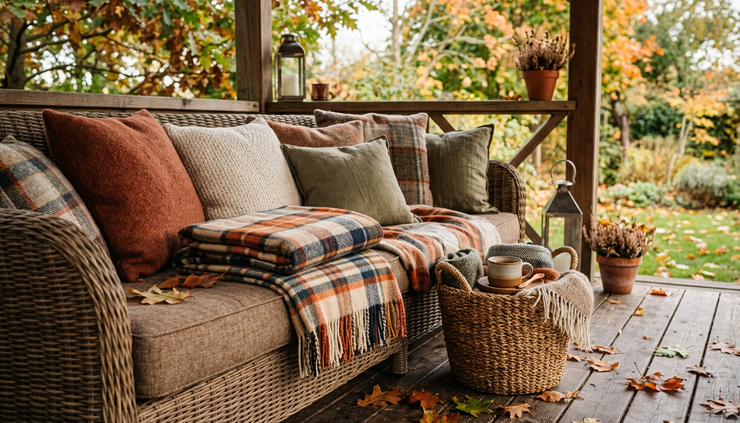
Cozy outdoor spaces start with texture. The fastest way to soften a gazebo is to add layers underfoot, behind your back, and within arm’s reach.
An outdoor rug changes the feel right away. It defines the sitting area, adds comfort, and helps the gazebo feel more like a room. Choose a rug made for outdoor use so it can handle moisture and cleaning. Darker patterns, warm neutrals, rust, olive, charcoal, and deep brown all work well for fall.
Next, add cushions and pillows. If the gazebo is exposed to wind or rain, look for weather-resistant fabrics. Covers that zip off make seasonal cleaning easier. Keep the palette focused so the space feels calm rather than crowded. A few rich fall colors go a long way.
Good fall textures include:
Chunky knit throws
Wool-look outdoor blankets
Plaid pillows
Canvas cushions
Faux fur accents used sparingly
Wicker, wood, and metal finishes
Blankets deserve their own storage plan. A lidded basket, storage bench, or weatherproof deck box keeps them dry and easy to grab. Rolling blankets instead of folding them also makes the setup look relaxed and welcoming.
A cozy gazebo should invite people to stay longer than they planned.
That feeling comes from practical comfort. Add a place to set a drink. Keep extra blankets close. Make sure chairs support the back. Use footrests if the space is for lounging. Small choices make a large difference when the temperature drops.
Use lighting to change the mood
Fall evenings arrive quickly, so lighting matters more than it does in summer. The right lighting makes a gazebo safer, warmer, and more useful after sunset.
Start with overhead light. String lights are a classic choice because they add a soft glow without feeling harsh. Hang them along the beams, around the roofline, or in a gentle zigzag overhead. Warm white bulbs usually feel better than bright white lights in a cozy outdoor space.
Lanterns add charm and flexibility. Use battery-operated candles if you want the look of flame without worrying about wind or open fire. Place lanterns near steps, beside seating, or along the edge of the gazebo to create a gentle border of light.
A layered lighting plan works best:
Lighting layer | Good options | Best use |
Overhead glow | String lights, pendant-style outdoor fixtures | General atmosphere |
Task lighting | Table lamps rated for outdoor use, clip lights | Reading, eating, games |
Accent lighting | Lanterns, LED candles, path lights | Soft edges and seasonal style |
Safety lighting | Step lights, solar path lights | Walkways and transitions |
If the gazebo has electricity, outdoor-rated dimmable lighting gives the most control. If not, solar and battery options can still create a beautiful setting. Look for lights made for outdoor use, and check that cords, plugs, and fixtures match the conditions in your yard.
Avoid making the whole space too bright. Fall lighting should feel soft and layered. One overhead source paired with two or three smaller glows usually looks better than a single bright bulb.
Add warmth safely and thoughtfully
Cool air is part of fall’s charm, but no one wants to shiver through dinner. Heat helps turn a pretty gazebo into a usable outdoor room.
The best option depends on the gazebo’s structure, ventilation, and local rules. Always follow the manufacturer’s instructions for heaters, fire pits, and electrical products. Keep heat sources away from curtains, pillows, dry leaves, and wood surfaces that are not protected.
Common warming options include:
Freestanding patio heaters
Tabletop heaters approved for outdoor use
Electric infrared heaters
Fire pits placed outside the gazebo
Chimineas positioned in a safe open area
Heated seat pads or outdoor-safe warming accessories
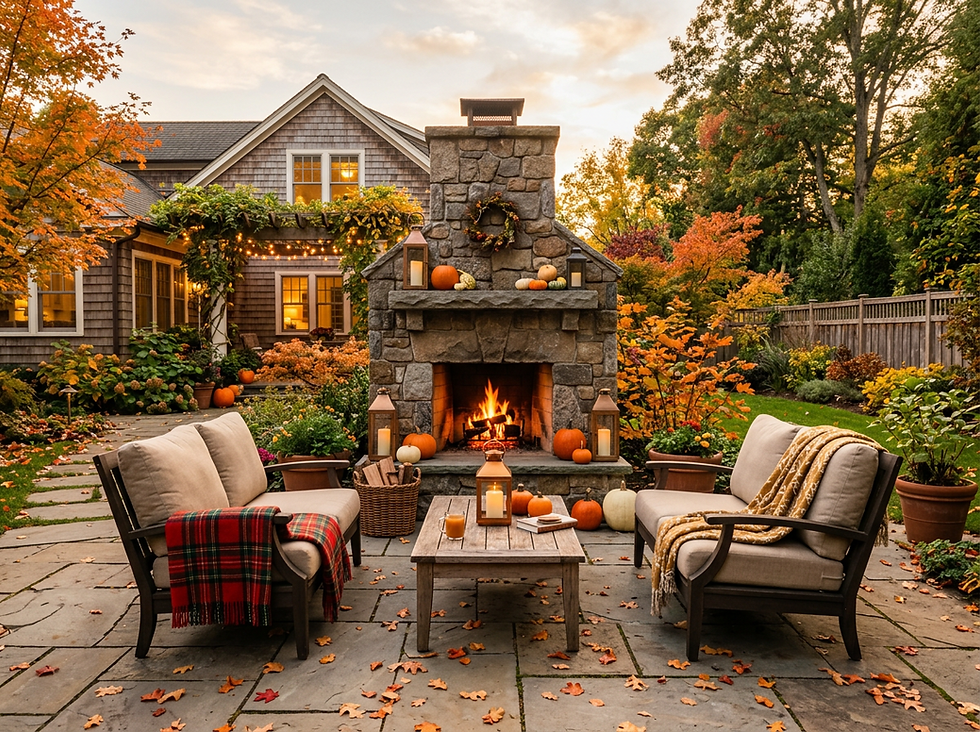
A fire pit can create a beautiful gathering point, but it usually belongs near the gazebo rather than inside it. This creates two connected zones: a sheltered seating area and a fire-warmed conversation area. Together, they make the backyard feel more complete.
If wind is a problem, consider adding privacy screens or outdoor curtains. They can block some breeze and make the gazebo feel enclosed. Choose breathable, outdoor-safe materials and secure them so they do not flap into heaters, candles, or food.
For a simple no-construction upgrade, place tall planters or trellises around the opening that gets the most wind. Ornamental grasses, evergreens, and fall containers can soften the space while adding privacy.

Bring in fall decor without overdoing it
Fall decorating works best when it feels gathered, not staged. A few natural pieces usually look better than every surface covered in pumpkins.
Start with the colors already in the yard. If the trees turn gold, lean into warm browns, cream, and muted orange. If the yard has evergreens, mix in deep green, copper, burgundy, and tan. Let the surrounding landscape guide the palette.
Good fall decor for a gazebo includes:
Pumpkins in different sizes and colors
Potted mums or asters
Lanterns with LED candles
Dried grasses or branches
Wreaths made from natural-looking materials
Wooden trays and bowls
Seasonal table runners
Use odd-number groupings for planters and pumpkins. A cluster of three near an entry often looks more natural than a straight line of matching pieces. Mix heights as well. A tall planter, medium pumpkin, and low lantern can make a small corner feel finished.
For a dining setup, keep the table simple. A runner, low centerpiece, and candles are enough. Avoid tall arrangements that block conversation. If the gazebo gets windy, use heavier pieces like ceramic bowls, wood trays, and weighted lanterns.
Scent can also shape the mood. A pot of cider, cinnamon sticks in a mug, a woodsy candle in a protected lantern, or a tray of baked snacks can make the whole space feel seasonal. Keep scented items subtle, especially when serving food.
Make the space weather-ready
Fall weather can change quickly. A gazebo that looks beautiful on a dry afternoon may need extra support for damp mornings, chilly nights, and windy weekends.
Start with water control. Check that the roof sheds water properly and that gutters or edges do not pour directly into the seating area. If rain blows in from one side, add roll-down shades, curtains, or panels made for outdoor use.
Flooring matters too. Sweep leaves often so they do not hold moisture against wood, composite, or stone. Wet leaves can also become slippery. If the gazebo has steps, add lighting and consider traction strips where needed.
Protect fabrics with storage and routine care. Even weather-resistant pieces last longer when they are not soaked day after day. Keep cushions upright after rain so they dry faster. Store extra pillows and blankets when not in use.
A simple fall maintenance rhythm can help:
How often | What to check |
Weekly | Sweep leaves, clean tables, shake out rugs |
After rain | Dry cushions, empty water from trays and planters |
After wind | Check curtains, lights, lanterns, and loose decor |
Monthly | Inspect cords, heaters, furniture frames, and roof edges |
If your area gets early frost, use planters that can handle cold snaps. Terracotta can crack when moisture freezes, so resin, fiberglass, metal, and frost-resistant ceramic may be better choices for late fall.
Create zones beyond the gazebo
A great outdoor living space does not stop at the gazebo edge. The surrounding area can make the whole yard feel more useful.
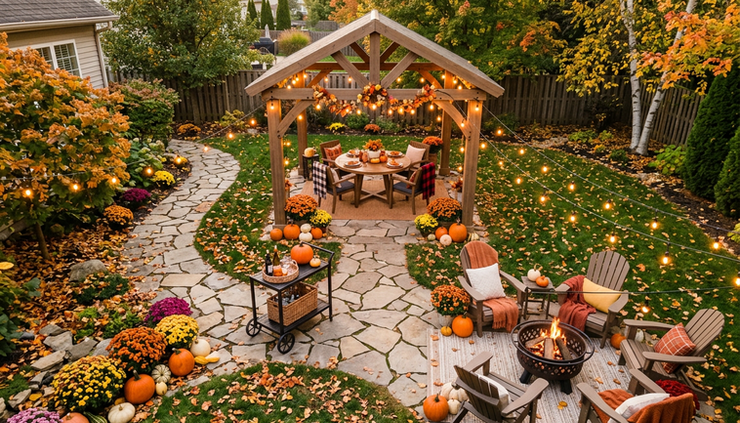
Think of the gazebo as the main room. Then add nearby zones that support it. A grilling area, fire pit, garden bench, drink station, or small dining table can turn one structure into a full fall gathering space.
Pathways help connect these zones. Use stepping stones, gravel, pavers, or solar path lights to guide movement. People should be able to walk from the house to the gazebo without stepping through wet grass or dark corners.
If space allows, place a small serving cart near the gazebo. It can hold drinks, mugs, napkins, snacks, or a thermos of hot chocolate. During gatherings, this keeps traffic flowing and prevents the table from getting crowded.
For families, add a flexible open area nearby. Kids can play, pets can move around, and adults can still enjoy the gazebo. A few outdoor poufs or folding chairs can be pulled into the main seating area when guests arrive.
Creating Cozy Fall Gazebos and Outdoor Living Spaces often comes down to these connections. The gazebo may be the anchor, but lighting, pathways, warmth, and nearby seating make the entire yard feel intentional.
Choose materials that fit the season
Fall can be tough on outdoor materials. Moisture, leaves, wind, and temperature swings all affect how furniture and decor age.
Wood gives a gazebo warmth and character, especially in cedar, pine, or stained finishes. It may need sealing or routine care depending on the climate. Metal furniture can look clean and last well, but cushions make it more comfortable in cool weather. Wicker and resin pieces can work beautifully if they are rated for outdoor use.
For textiles, choose outdoor fabrics when possible. They resist fading and moisture better than indoor materials. That does not mean everything has to feel stiff. Many outdoor pillows and rugs now have soft textures that work well for cozy spaces.
Look for pieces that balance beauty with easy care.
Strong fall-friendly choices include:
Outdoor rugs made from polypropylene or similar weather-ready fibers
Powder-coated metal frames
Teak, cedar, or treated wood
Resin wicker
Washable cushion covers
Lidded storage benches
Heavy lanterns that resist tipping
Avoid fragile decor that cannot handle wind or damp air. Lightweight faux leaves, paper decorations, and thin plastic pieces often look messy after a few storms. Natural materials, sturdy ceramics, baskets, wood, and metal usually age better through the season.
Add personal touches that make people linger
The most memorable outdoor spaces feel personal. They do not need to look like a catalog. They need signs of real life.
Add a stack of favorite books, a small speaker for music, a basket of card games, or a tray for weekend breakfasts. Keep a few mugs nearby if the gazebo sits close to the kitchen. Set out a small chalkboard with the evening menu or a simple welcome message if guests are coming.
Sound matters too. Wind chimes, leaves moving, a small water feature, or quiet music can make the gazebo feel peaceful. Keep the volume low so conversation stays easy.
Food and drink can turn a nice space into a tradition. Try a Sunday soup night, cider after yardwork, or dessert outside after dinner. When a gazebo supports small rituals, it becomes part of how fall feels at home.
Keep the setup easy to reset. If creating the space takes too much effort, it will not get used often. Store blankets where they belong, keep lanterns charged, and choose furniture that does not need constant rearranging.
Bring it all together for a fall-ready retreat
A cozy fall gazebo works because every detail supports comfort. The seating invites people in. The lighting softens the evening. The blankets, rugs, and pillows add warmth. The decor reflects the season without taking over. The paths, heaters, and storage make the space practical enough to use often.
Start with one strong improvement if the project feels large. Add lighting this weekend. Bring in a rug next. Set up a blanket basket. Place pumpkins and mums near the entrance. Small layers build quickly, and each one makes the space more welcoming.
By the time the air turns crisp, the gazebo can become the easiest place to enjoy the season. Step outside, pull up a blanket, switch on the lights, and let the backyard do what fall does best: slow the evening down.
Ready to create something amazing in your living space? Contact us today!


Comments